The Extraordinary Story Behind the Construction of the Iconic UP Chapel Dome
On August 25, 1955, the UP Catholic Community gathered to pray for one intention: that the concrete dome of the future Church of the Holy Sacrifice could be poured without rain interrupting the work.
According to the UP Student Catholic Action (UPSCA) Facebook Page, UPSCAns and members of the UP Catholic Community under the care of Fr. John P. Delaney, SJ "stormed Heaven" for the success of what they called Dome Day. The dome had to be poured continuously, and rain could compromise the structure.
The chapel itself was groundbreaking. Designed by a young Leandro Locsin, later a National Artist for Architecture, and engineered by Alfredo L. Juinio, it featured a pioneering thin-shell concrete dome. Engr. David M. Consunji, the chapel builder, developed the construction methods and produced the 3,000 psi concrete needed to build it.
The construction of the UP Chapel revolutionized structural and architectural design and set a new standard for concrete construction.
This innovation paved the way for the construction of dozens of skyscrapers in the following years.
Two Weeks of Special Prayer
The prayers began weeks before the scheduled pouring.
As shared by the UPSCA Facebook Page, Fr. John P. Delaney, SJ wrote in Chapel Chismis on August 14, 1955:
"D-DAY, AUGUST 25. D-Day-that means DOME DAY.
That means that, if all goes well, if the weather is favorable, if the materials continue to be available, the dome will be poured on Thursday, August 25. That means that the next two weeks are the most crucial in the construction of the Church of the Holy Sacrifice. The next two weeks are the weeks for special prayer.
Suppose we put the next two weeks under the care of St. Joseph, ask him to protect all our workers, guide all the planners and supervisors, and see the dome through to a brilliant success. These next two weeks we need that hofy one thousand."
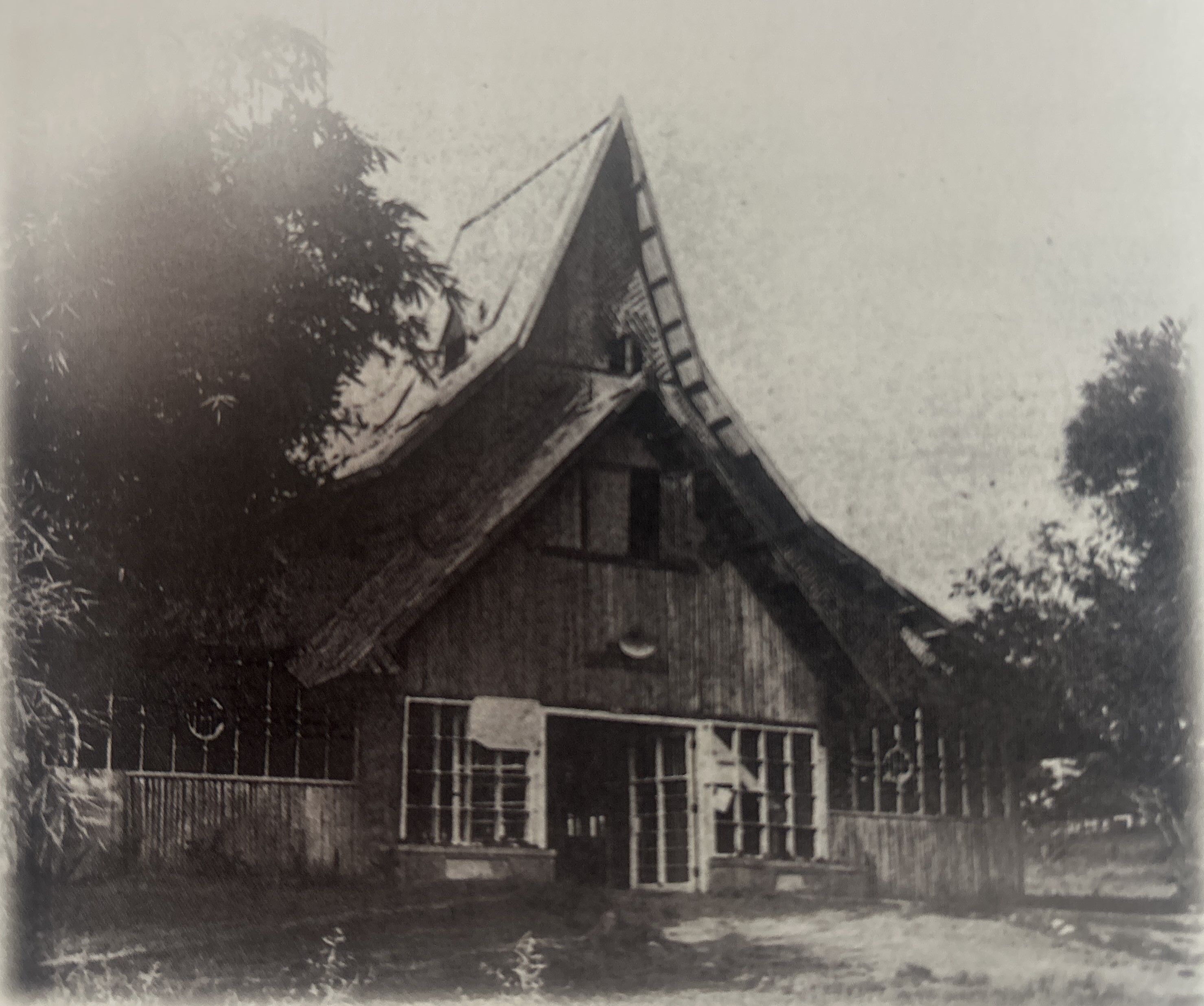
The old UP Chapel, a former U.S. Army chapel that had been converted into a horse stable and stood amid a field of cogon grass, was transformed by Fr. John P. Delaney, SJ into a modest yet cherished place of worship. (Photo lifted from A Passion to Build: A Memoir of David M. Consunji)
A week later, as quoted also by the UPSCA Facebook Page from Chapel Chismis dated August 21, 1955, Fr. Delaney again appealed to the community:
"THURSDAY, DOME DAY.
With your open houses and your dances and the heavy rain, your attendance at Mass slipped miserably yesterday. If we want the kind of weather we need for the rest of this week and especially on Thursday, we'll have to join more enthusiastically and in much greater numbers in the novena to St. Joseph. So, be seeing you at Mass every day this week. I'll let you know later the time of the special early Mass on Thursday."
In his memoir A Passion to Build, Engr. Consunji, the founder of the DMCI Group of Companies, recalled the challenge of constructing the dome:
"The crucial part about this was that the concrete on the dome had to be poured continuously: that was non-negotiable. I estimated the job would take not less than 18 hours. So the weather had better cooperate with us. By then it was August 1955, already well into the rainy season and always a stormy month."
‘You do the pouring. I will do the praying.'
He remembered the morning of August 25, 1955:
"I woke up at 4 o'clock in the morning. It had started to rain and I could see the beginning of a storm. When I arrived in UP, the rain and the wind had started to come in as well."
He then went to see Fr. Delaney.
"I went straight to the chapel. Fr. Delaney was preparing for the 5 a.m. Mass. I asked him if we should proceed in spite of the weather. He said, 'Yes, go ahead. You do the pouring. I will do the praying.'"
Engr. Consunji continued:
"I could do nothing but obey. With a heavy heart. I went to see my workers, who were all ready to go home. To their surprise, I said: 'We will do the pouring today, so let's start.'"
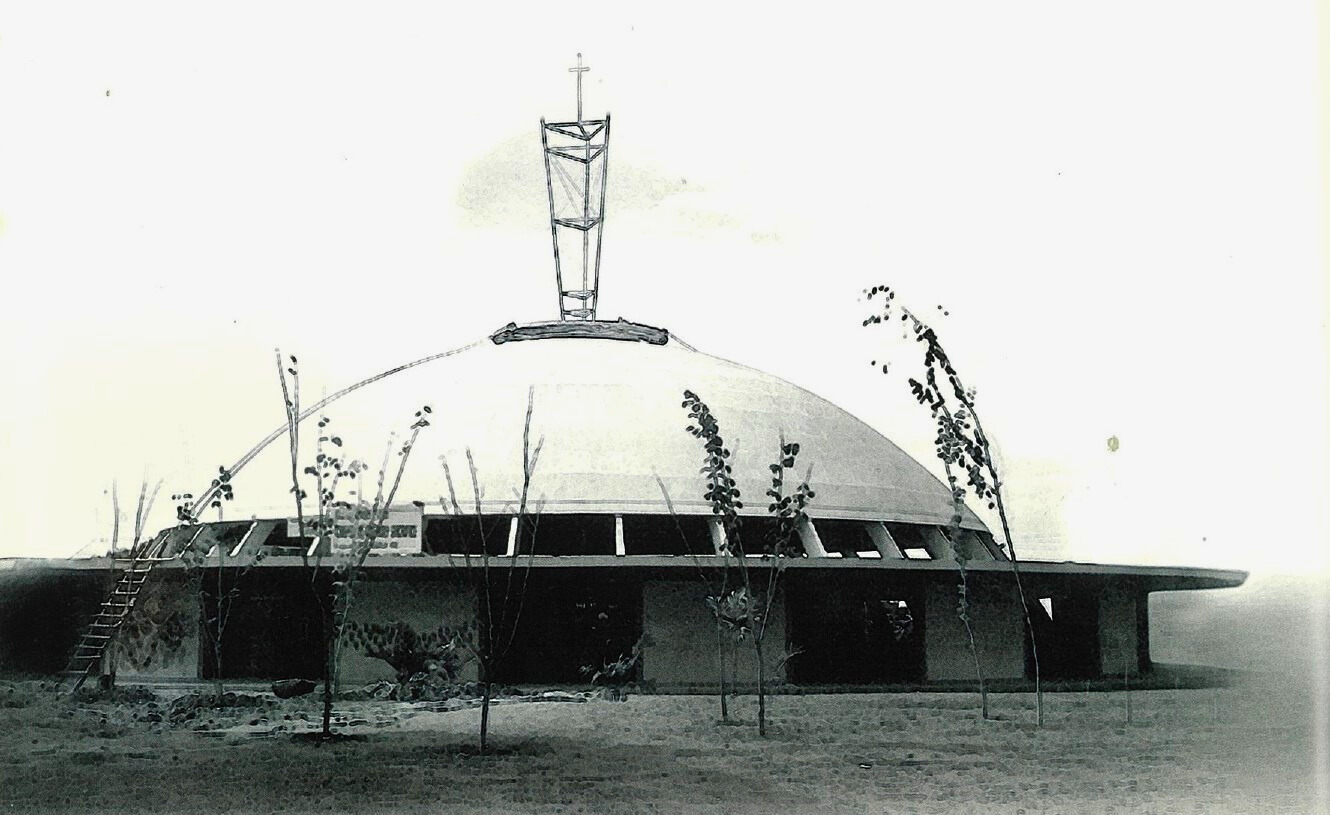
According to Engr. Consunji, Fr. Delaney wanted a church that was almost all roof, because he said: "A church is no more than a covering, a roof, for an altar... and for the community that gathers in family oneness about the altar to seek, through a holy interchange of gifts, the union with God." (Photo lifted from A Passion to Build: A Memoir of David M. Consunji)
The storm never hit the jobsite
At 5:00 a.m., the pouring began.
"At 5 o'clock, everything was set. The concrete mixers were humming and the workers were ready to pour concrete around the base of the roof. I looked up once more and saw the dark skies. There were rain showers all around the UP campus-but not on the site itself. It didn't look good to me, but I gave the go-ahead just the same."
Soon, the weather worsened.
"We started pouring. After an hour, the weather turned for the worse. The entire morning, we saw UP students running from building to building drenched, their umbrellas blown all over by the strong wind. It seemed to us that the entire campus was experiencing a storm. But, miracle of miracles, not a single drop of rain fell on the spot where we were working! The entire jobsite was dry."
Later that morning, Engr. Consunji went to the old chapel.
"I went to the old chapel to see Fr. Delaney and have breakfast. There I saw many students, all members of the UPSCA, praying in relays. They were storming the heavens with prayers! No wonder the storm never hit the jobsite."
According to Felisberto G.L. Reyes in Building the New Chapel, as shared by the UPSCA Facebook Page:
"D-Day--Dome Day--was Thursday, August 25, 1955. The continuous pouring lasted for more than 24 hours, and stopped only when the dome was completed. The Prayer Brigade went into action all the while. Although the weather was threatening the whole week, only a gentle rain fell at the start of the pouring. Consunji, though, had a ready supply of canvas in case of a heavy downpour."
Engr. Consunji also recalled:
"Three hours into the work, the entire periphery of the dome, about a meter high, was concreted. It was going to be a lot easier from then on. My workers stopped worrying about the rain and just kept working on and on, moving the buggies around on the runway, loading, pouring until at last, the entire dome was covered."
The work continued through the day and into the night.
"It was already 11 o'clock in the evening when the last buggy of concrete was emptied, 18 hours since we started. In the next hour, we did the finishing touches-smoothening out the rough edges, making sure the contour of the dome was perfect. At 12 midnight, a rain shower began to fall on the dome, as if on cue, curing the concrete in the process. By then, all our anxieties had vanished. The dome had been built."
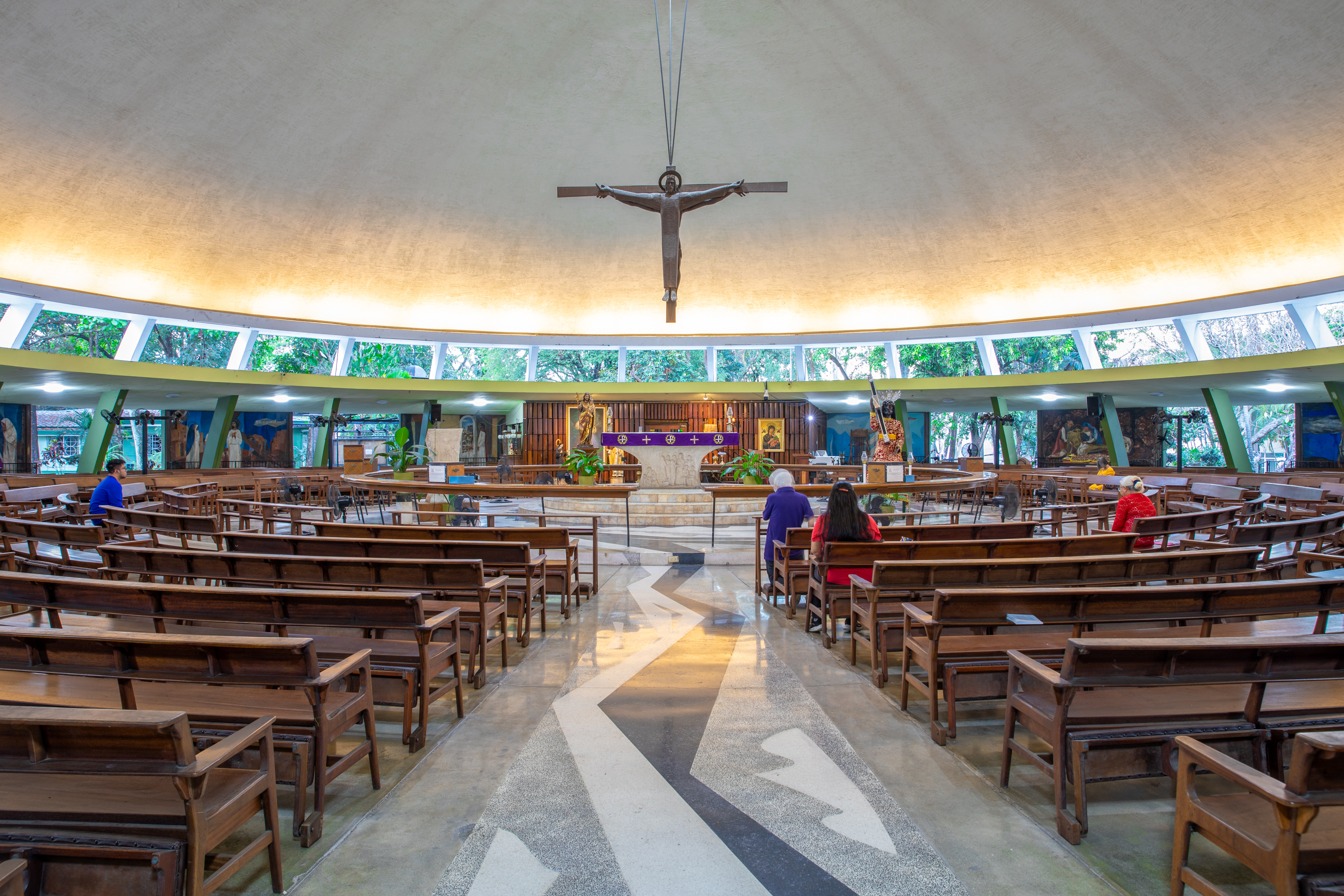
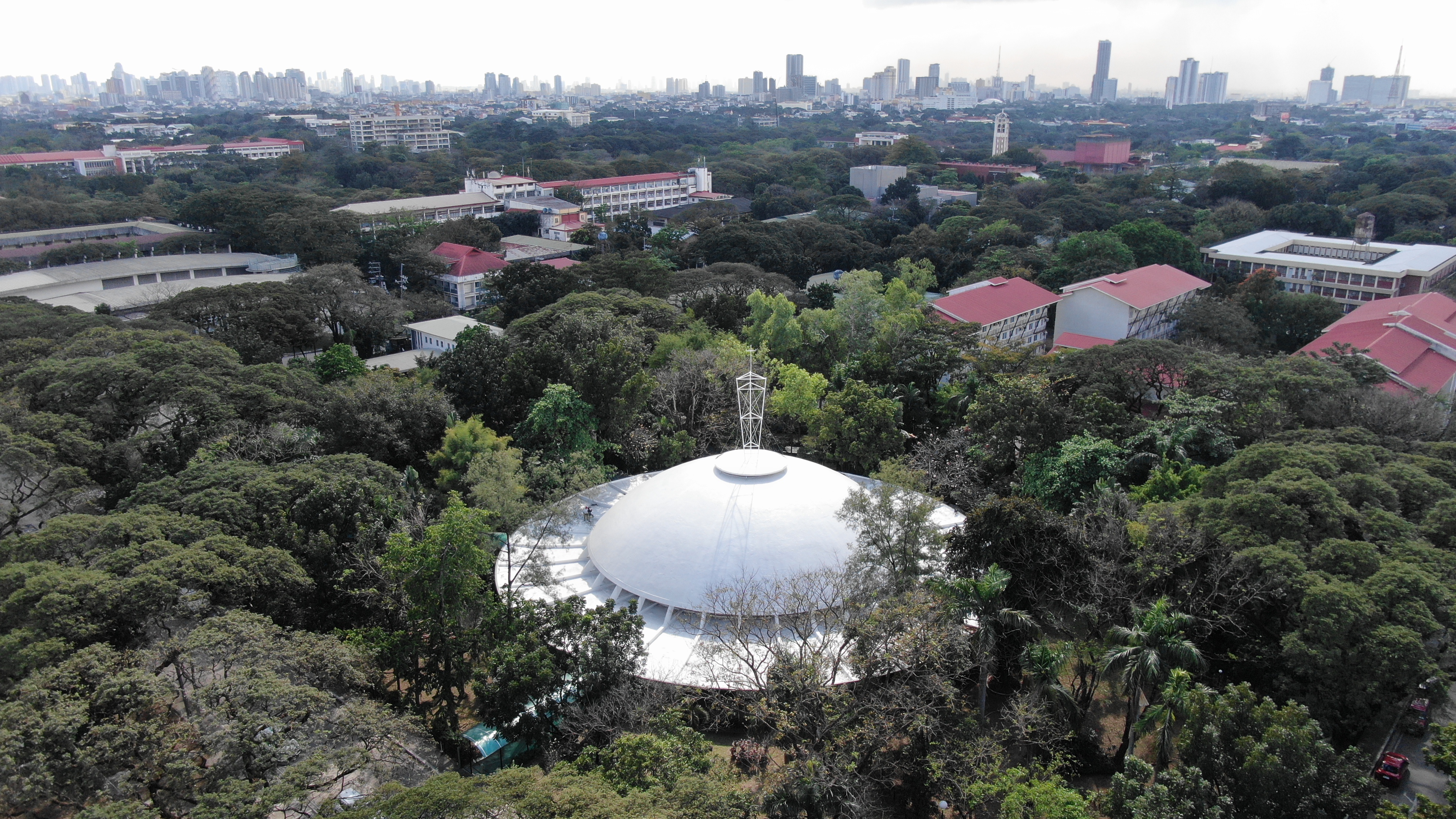
In 2021, DMCI Homes, in partnership with JBLS Trading & Construction Aesthetics and Boysen Philippines, completed the restoration of the chapel to help preserve its rich history and spiritual significance for future generations. (Photo courtesy of DM Consunji, Inc.)
‘A full-house chapel’
Three days later, Fr. Delaney reflected on Dome Day in Chapel Chismis. As shared by the UPSCA Facebook Page:
"HE'S A GREAT MAN-THAT SAINT JOSEPH.
I rather think he was making a little pasikat when the rain fell so early on Thursday morning-sort of say, 'Look here, you people, it's supposed to be raining today, but just for your sakes, I'll hold it off.' And I admit that he kept us very nervous all day long, but he did his job, kept off the rain all day long and let us finish happily the most difficult part of our Chapel-the dome. So, thanks for all the Masses and Communions and all the Rosaries that were said all day Thursday. And now I hope you won't forget to thank Saint Joseph. Maybe Wednesday might be a good day for a very big Mass of thanksgiving.
How stands the Chapel now? There's only one more really delicate job, the skylight with the triangular steeple above it. But I think the engineers have that under control, too. Professor Juinio has to do most of the worrying about such structural details.
So suppose we take some worrying off his mind. We pray for his little children, that God may grant them speedy, complete cure and he can dedicate all his worrying to the Chapel.
The forms cannot be removed from the dome for about 26 days. After that they'll be able to devote all their time to the inside of the structure. So far, we are up to schedule. Keep on praying that things continue to go so we'll be in the Chapel before Christmas."
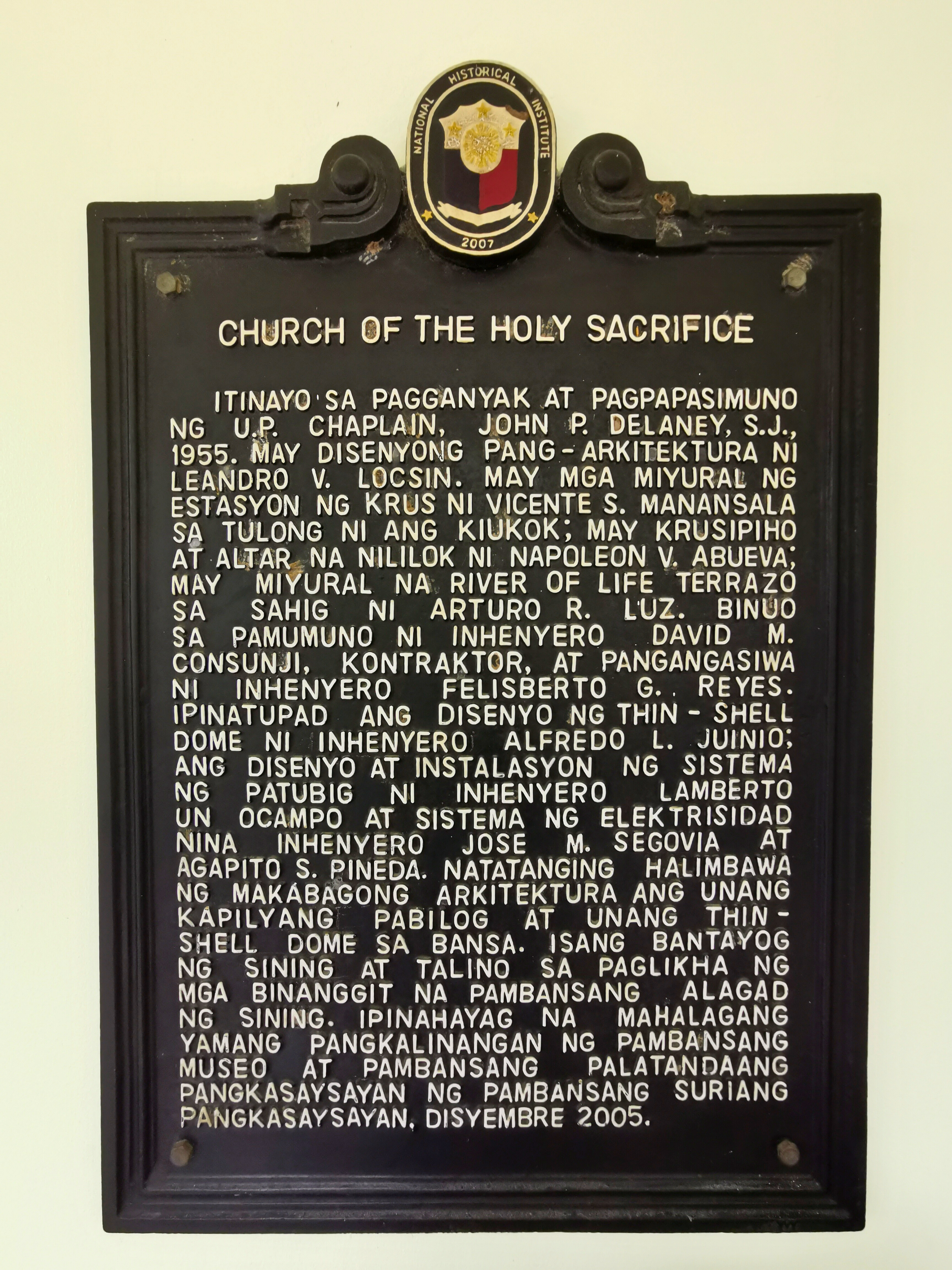
The UP Chapel is also distinguished by its artistic heritage, featuring the works of five would-be National Artists: Leandro Locsin (Architecture), Napoleon Abueva (Sculpture), Arturo Luz (Visual Arts), Vicente Manansala (Painting), and Ang Kiukok (Visual Arts). It is also the first circular chapel in the Philippines, and these remarkable features make it a national cultural treasure and historic landmark.
Decades later, as shared by the UP Student Catholic Action (UPSCA) Facebook Page, Sr. Leonora Minoza, MMS recalled in My Recollection of Fr. Delaney:
"There was a time, during the construction of the Chapel, when a particular type of weather was needed for the continuous concrete-pouring of the thin-shell dome. There had to be just a certain amount of clouds in the sky till 10:00 am; then there had to be a gentle shower that would last till the afternoon. This had to be so while the dome was under construction that day. Fr. Delaney informed the community about it. He suggested having Mass at 3:00 am for this intention. He did not have to say it twice--the response was a full-house chapel!"
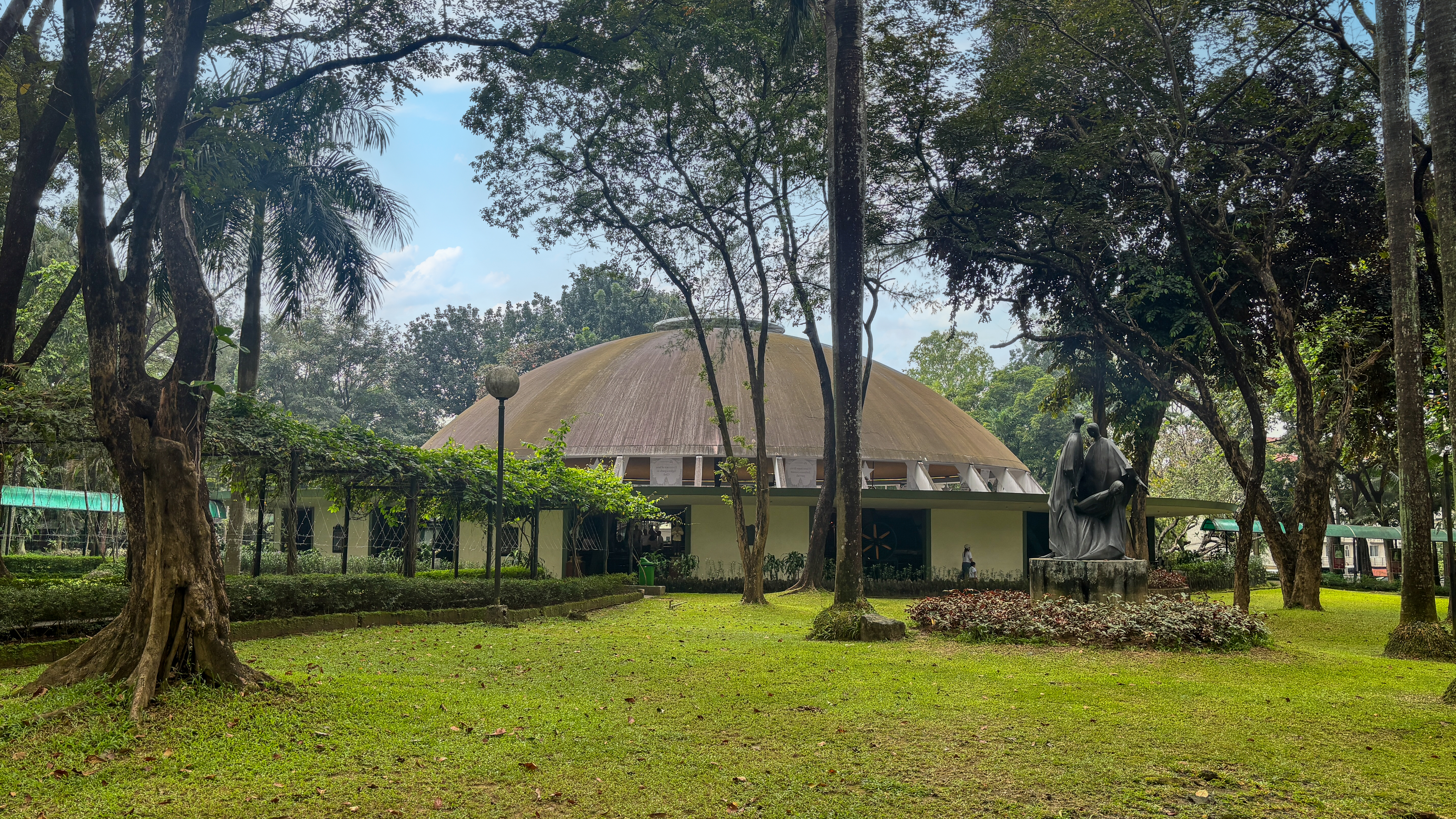
The UP Chapel following landscape enhancements by DMCI Homes, completed as part of the commemoration of the chapel's 70th anniversary celebration last December 20, 2025.
Sources: UP Student Catholic Action (UPSCA) Facebook Page; A Passion to Build: A Memoir of David M. Consunji; Building the New Chapel by Felisberto G.L. Reyes; Chapel Chismis by Fr. John P. Delaney, SJ; My Recollection of Fr. Delaney by Sr. Leonora Minoza, MMS.
How do you feel about it?